
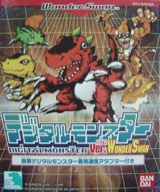
A Digimon virtual-pet game for the original WonderSwan, released three weeks after the console, that gathers the monsters of the first Digital Monster toys on one cartridge.
Screenshots
Title screen 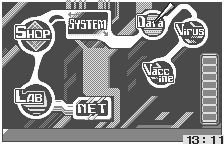
In play 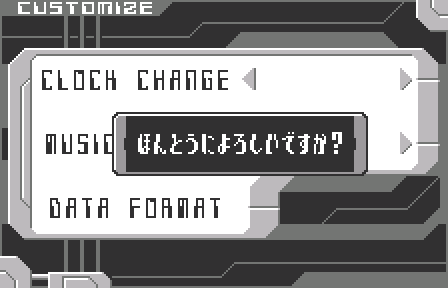
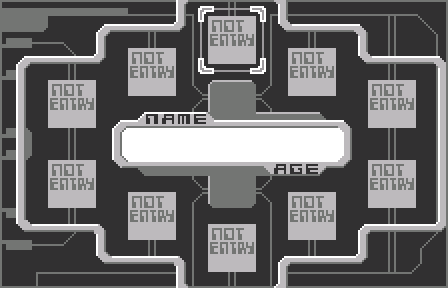
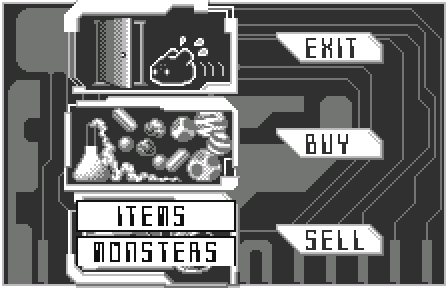
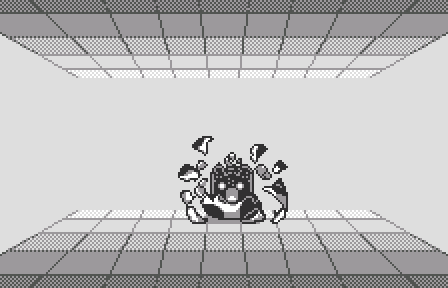
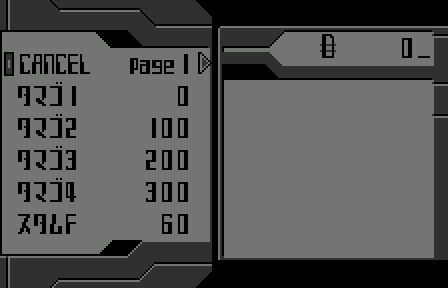
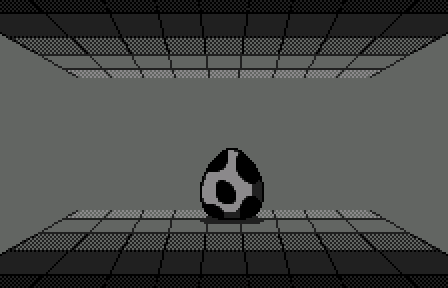
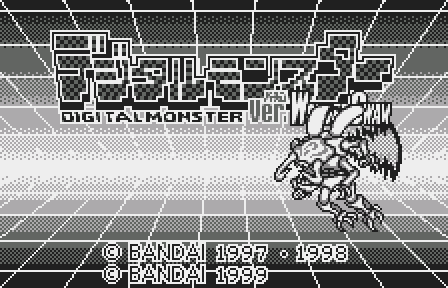
Digital Monster Ver. WonderSwan is a raising game based on Bandai’s Digital Monster virtual-pet toys, the handheld devices that started the Digimon franchise. Bandai published it in Japan on 25 March 1999, three weeks after the WonderSwan went on sale, which made it one of the console’s earliest releases.
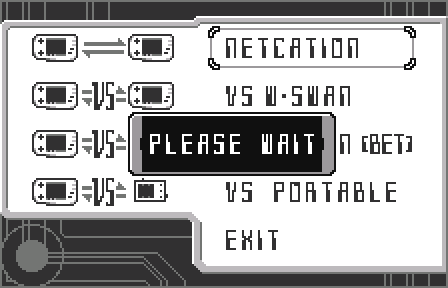
The game keeps the structure of the toys: a Digimon hatches from an egg, is cared for and trained, and evolves depending on how it is raised. What the WonderSwan adds is scale. Up to eight Digimon can be raised at once, and up to five of them fight together as a team, against the computer, against a second WonderSwan or against the original toys.
The box included an adapter for linking the cartridge to the original pet toys. Two players can also battle each other and trade Digimon over the WonderSwan link cable, which was sold separately.
The story
The game has only a thin frame story, which Bandai set out in its own description. A network called the Digimon World Site has been completed, linking Digimon tamers all over the world so that they can battle one another, and its battlefield has brought in a new rule, the unit battle, in which several Digimon fight on each side. The player is one of these tamers, and the goal is the title of King of Digimon.
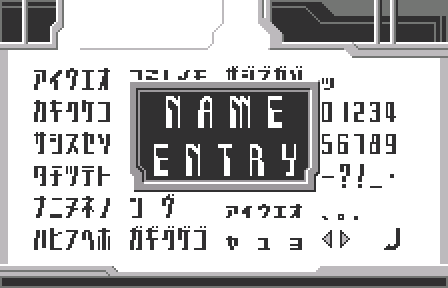
The cast is the Digimon themselves. Each one starts as an egg, a DigiTama, bought in the shop, and the player names it when it hatches. The 78 species are the monsters of the first four Digital Monster toys and of the first Digimon Pendulum, the Nature Spirits version, together with six that appear here for the first time: Golemon, Musyamon, Dokugumon, Snimon, Chimairamon and Asuramon. They hatch from the Infinity egg, which the shop sells only once the last battle area has been cleared, and they take the place of familiar Digimon such as Devimon and Andromon on the old evolution lines.
The story moves forward only through the battle areas. The first three are named after the Data, Virus and Vaccine attributes, and each sets Digimon of its attribute against the player’s team over five battles, the last of them against a boss. Beating all three opens a fourth area called Crack, and beating that opens the neo Digimon area, whose boss stands between the player and the ending. Each cleared area pays out coins and items and opens a new kind of training, so the campaign works more as a ladder of rewards than as a tale.
How it plays
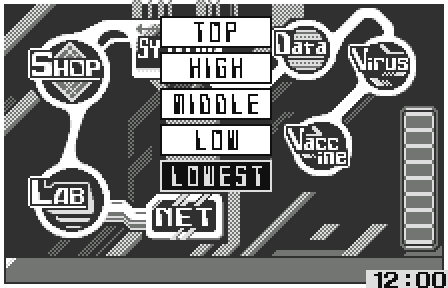
The WonderSwan is held sideways, and everything is reached from a main screen of seven places: System, Shop, Lab, Net and the three battle areas. Time runs on a 24-hour clock. The System menu sets the clock to one of five speeds, from Top through High, Middle and Low to Lowest. Time Jump skips ahead to a chosen hour but stops at once if a Digimon calls for attention, Mail goes straight to a Digimon that is calling, and Save & Exit saves the game to the cartridge and quits.
A new game starts in the Shop, where the first egg is bought, and the Shop also buys and sells items and Digimon. The Lab holds up to eight Digimon, each with its own cage and status screen, and the care is that of the toys: feeding meat or protein, training, flushing away droppings, switching off the light when a Digimon falls asleep, and treating illness and injury. A Digimon can also be given an item, or frozen to stop it ageing or getting hungry, though not while there are droppings in its cage. Droppings pile up to ten, and eight of them make a Digimon ill. An injured Digimon cannot fight until it has been treated.
How a Digimon is looked after decides what it becomes. A newly hatched In-Training Digimon grows into a Rookie after five to seven hours, and the Champion and Ultimate stages follow as it ages; only the Pendulum line goes on to a Mega stage. The route depends on counts the game keeps for each Digimon: care mistakes, which are calls left unanswered for an hour or more, successful training sessions, the number of times it was fed until full, and the number of times it was woken from sleep. Some Ultimates also need a battle record of at least fifteen fights at the Rookie or Champion stage, and the chance of that evolution depends on the win rate: one in two at 80 percent, one in four at 70 percent and one in eight at 40 percent. In the end a Digimon dies, and a new egg can be hatched from its grave.
Training comes in four kinds, and only the first is open at the start. Ver. 1 raises strength by one. Ver. 2, unlocked by clearing the three attribute areas, raises the sync rate that powers combined attacks but wears down stamina; the bonus it gives a team is a tenth of the team’s total successful training sessions, as a percentage, up to ten percent for each Digimon. Ver. 3, from the Crack area, restores stamina but leaves the Digimon more easily injured, and Ver. 4, from the neo Digimon area, lengthens its life at the cost of evasion in battle. Stamina matters because each battle uses three points of it. A Digimon with only a little left can still fight as long as it is not at zero, and four proteins restore three points.
Before each battle the player picks a team within a budget of 100 points. An In-Training Digimon costs 20, a Rookie 30, a Champion 50, an Ultimate 60 and a Mega 80, so only In-Training Digimon can make a full team of five, and a single Mega leaves room for nothing but one In-Training partner. An item can then be handed to the team, or the fight started without one. The battle runs by itself on an angled overhead view, with the Digimon set out on a grid, up to five on each side, acting in order of speed and able to attack different opponents; the grid itself is only for show. A win pays out coins and items.
When a team of two or more fills its sync gauge to 100 percent, it unleashes a combined attack called a Variable. The damage is a fixed share of the enemy team’s starting total HP, and it grows with the number and the stages of the Digimon in the team: two In-Training Digimon deal 20 percent, five deal 50 percent, and two Champions also deal 50. Fourteen special pairings, such as Devimon with Angemon or Greymon with Monochromon, produce a stronger Variable with its own animation. This is why a team of small Digimon can beat stronger ones, and the enemy line-ups in each area are fixed, so a team of five In-Training Digimon can get through every battle in the game; it is also the team recommended to beginners.
There are 28 items. The Protector, sold in the shop, prevents injury in battle; the Trainer adds ten to a Digimon’s training count and three to its successes; and others raise attack, speed or sync, some for one Digimon and some for the whole team. Money tops out at 60,000 and the bag at 30 items. Played alone the game gives less than it does with friends and toys, because several items and the prize Digimon come only through link play.
Development and release
The game is usually credited to SIMS, though this has never been confirmed. Bandai sold the cartridge on the strength of the toys, which it said had passed eight million units across the series, and claimed that the WonderSwan’s processing power was what made it possible to raise eight Digimon at the same time; it also promised large battles with up to ten Digimon on screen. The game has mono sound, horizontal play and support for two players, and the bundled adapter lets the game battle both the original toys and other copies of the WonderSwan version. Only one adapter came in each box, and the game’s manual describes joining two of them as the wrong way to connect. The game sold about 103,000 copies, which places it eighth among releases for the original WonderSwan.
Modes and features
Besides the campaign against the computer, the Net menu handles link play: battles with the original toys through the bundled adapter, and battles and Digimon trades with a second WonderSwan over the link cable. Some items, such as the Nano Machine that halves a Digimon’s injuries, the Virus C, Data C and Vaccine C items that make a whole team fully Virus, Data or Vaccine, and the Chime, which changes the sound of a Digimon’s calls, can only be obtained through link play or from the toys.
Secrets and extras
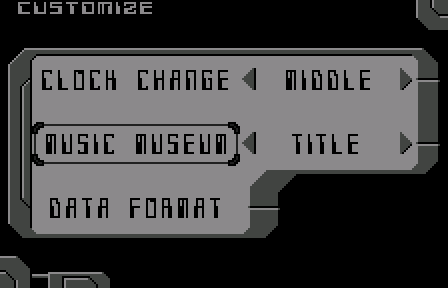
A Digimon which reaches the end of its life with at least 100 wins is entered in a museum when the player hatches the next egg, where its evolution route and battle record can be viewed. When a WonderSwan Digimon beats a Digimon from one of the toys, it sometimes wins that Digimon as a prize, as long as there is a free slot in the lab. Clearing the Crack area adds a Pendulum egg to the shop, and clearing the neo Digimon area adds a mysterious Infinity egg that can grow into one of the hidden Digimon. On the lab’s selection screen, pressing down shows each Digimon’s training counts, a display that appears only after the ending.
Ports and other versions
The cartridge was made for the WonderSwan. It grows out of Bandai’s Digital Monster virtual-pet toys as their WonderSwan version, but it is a new game rather than a conversion of any one of them: it gathers the monsters of five different toys, adds six Digimon of its own, and lets eight be raised at once and sent into battle in teams of up to five. It was never ported or re-released on another system. An English-language release for Hong Kong and the wider Asian market may also exist, but nothing more is known about it. On home consoles the same idea had already been tried a year earlier in Digital Monster Ver. S: Digimon Tamers for the Sega Saturn, which is a separate game.