
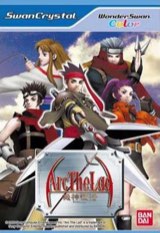
A tactical role-playing side story in the Arc the Lad series, starring Elk from Arc the Lad II, made for the WonderSwan Color and SwanCrystal.
Screenshots
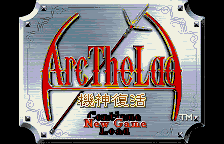
Title screen 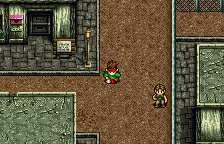
In play 
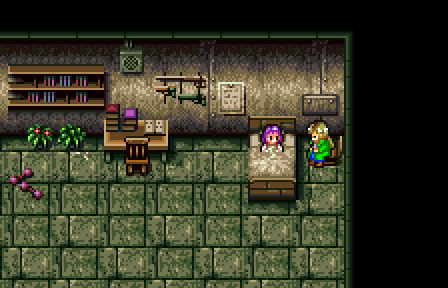
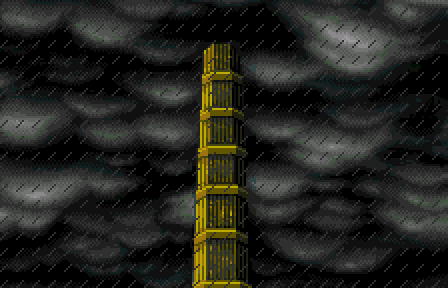
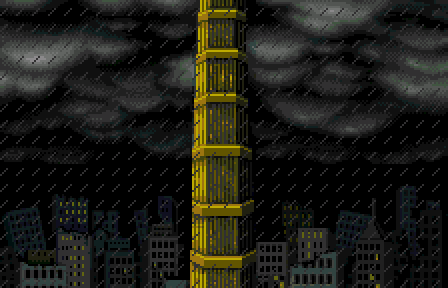
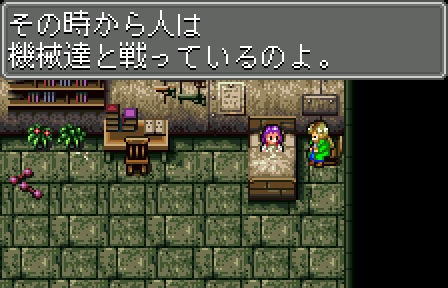
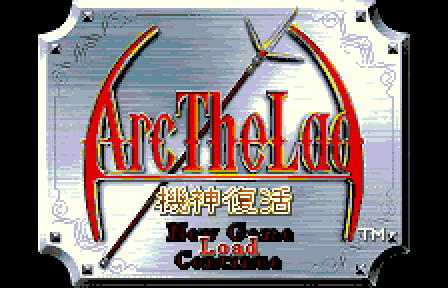
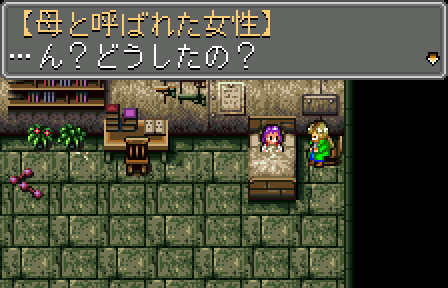
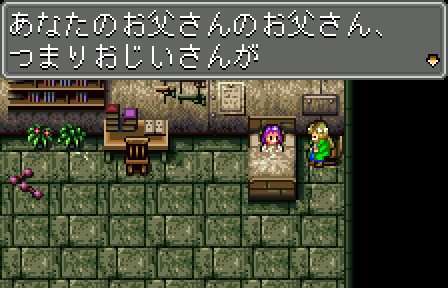
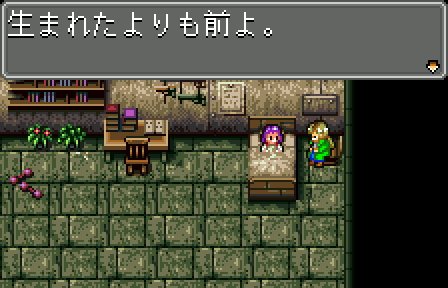

Arc the Lad: Kishin Fukkatsu is a tactical role-playing game in Sony Computer Entertainment’s Arc the Lad series, published by Bandai for the WonderSwan Color and released in Japan on 4 July 2002, eight days before the SwanCrystal went on sale. Sony announced it in 2001 as a side story led by Elk, the hero of Arc the Lad II. The title means “revival of the machine god”.
The story starts five hundred years in the future, where machines hold the surface, and sends a girl from that time back to stop them. It plays on Arc the Lad III’s world map and moves forward through the main plot and a long run of short guild jobs, a structure chosen to suit play on the move. The cartridge works only on the WonderSwan Color and SwanCrystal, not on the original black-and-white WonderSwan.
The story
The game is set three years after Arc the Lad III, in the same world after that game’s great disaster. Its map takes in North Surat, where the adventure begins, South Surat, Jihata, Forestamall and the Tower of God, and the towns along the way have hunters’ guilds that hand out paid work, shops, inns and, in one South Surat town, a black market.
Elk, the hero of Arc the Lad II, is now a grown-up and seasoned hunter who takes jobs for money. The game opens with him alone at an inn in North Surat. The guild master sends him to a nearby mountain of scrap to break up a gang of bandits who are planning a raid on the town. Once the fight is won, a girl drops out of the sky, and Elk carries her back unconscious.
The girl is Finia. She cannot remember anything about herself, and Elk offers to help find her parents. She looks like Kukuru, the heroine of the first two games, and her powers and memories return a little at a time through fighting. Behind her lies a future five hundred years away, in which machines have taken over the surface of the earth and people survive underground. She has been sent back in time to defeat the machines’ leader before it is too late.
Shu, the hunter who raised Elk, turns up at the guild beside the Guild Connect terminal and lends a hand, and after a fight in a local arena called the Danger Dome Finia herself joins the party. Further in, the story brings back other faces from the second and third games: Lisa, who keeps a ranch in Forestamall, the sorceress Marcia at the magic academy in Rusa, Alec, and Henrietta at the Rochefort villa in South Surat. Several of them are optional, and whether the player asks them along changes later events. The party travels by an airship, the Hien, once its fuel has been arranged in Jihata.
The main plot moves from region to region, and between the main events Elk’s group lives the life of working hunters, taking guild requests such as delivering a lost parcel, fetching a famous sake from another town or handling a stalker. The tone moves between this light town business and the larger threat that Finia has come to stop. Bandai’s own site added an illustrated diary written as Finia, opening with the day she fell from the sky and met Elk.
How it plays
Elk moves around towns and fields with the X buttons, A talks, checks and confirms, B cancels and START opens the menu. Dungeons are mostly runs of set battles, with save and recovery points along some of them. Free battle areas near the dungeons let the party gain levels, which the early game needs: the first cave has enemies strong enough that raising everyone a few levels first is the usual advice. Launching the Hien carries the party straight to the Tower of God, where for a long stretch there is no saving and little healing, so preparing beforehand matters.
Battles are fought in turns on a grid. In combat, X2 and X4 turn a ring of commands, X1 and X3 change pages in the item menu, and the Y buttons move a free cursor to look over the field and check each unit’s position and state. A attacks, A and B together end a turn, and B with Y can be set in the options as a shortcut to a special ability. Attacks from behind are the usual way to sweep away weak enemies, while attacks from the front deal less. Taking damage fills a gauge, and when it is full the character enters Rush Mode, moving freely and attacking without limit for a short time. Fights can be suspended mid-battle, and party members can be handed to the computer.
The party is three strong. Elk always fights and Finia does too except during certain events, so only the third place is a free choice, and from Jihata on the reserve members wait aboard the Hien, where talking to one swaps them in. Eight characters can join in all: Elk, Finia, Shu, Marcia, Alec, Lisa, Henrietta and Choco. Levels go up to 99. Each character has six special abilities, most of which come in three strengths learned at set levels, and each can use only certain weapons, so Elk takes swords and spears, Finia rods, handguns and machine guns, and Shu kicks, machine guns and shotguns. Finia learns no abilities at all until the first cave is cleared. Elk’s Invisible makes him untouchable for a turn, which makes him a decoy in boss fights, and his Strike Power and Magic Shield raise an ally’s attack and magic defence. Shu can steal items and lower an enemy’s defence. Marcia hits hard with magic of four elements but is very frail, and Lisa has the fullest set of healing abilities.
The guild is the heart of the game. It offers 42 numbered jobs spread over the towns, and the first one, Finia’s hunter registration test, must be cleared before the guild’s facilities open up. Jobs range from battles to errands and small puzzles: a quiz at the black market where every answer must be right, a shopping order where the shopkeeper changes the quantity at the last moment, a count of every hunter in a town, which has to include the player’s own party, and an examiner’s job at the magic academy won by lasting three turns without attacking. A wrong answer or the wrong item fails a job. Some jobs only appear once others are done or depend on who is in the party, and two jobs that share the same route can be taken at once to save a trip.
Clearing jobs earns guild points, which raise the hunter’s rank from amateur up to legend at 1,000 points. The Guild Connect terminal at the guild searches for information and hands out items when the rank rises: a fruit for reaching amateur, for example, and at legend rank the Romancing Stone, an accessory that makes special abilities cost no MP. Legend rank also opens a job with a strong weapon as its reward. A choice made at Lisa’s ranch in Forestamall, whether to take her into the party, decides whether legend rank can be reached at all, and it changes a few later jobs, drops and recruits.
Each town has its own shops, and prices start low, with healing herbs and a night at the inn at 20 apiece in the first town. The black market sells guns, rings and protective accessories, and its stock improves as the story moves on. Accessories guard against poison, sleep, silence and other ailments, soften damage from one element, raise attack, magic or speed, or raise experience and item drops. Wanted monsters, posted by the guild, carry items that ordinary enemies never drop; because loading a suspended game does not erase it, it pays to retry these fights until the item they want appears, and Shu has to be in the party to steal from them. Choco is far stronger than anyone else once she has caught up from level 1, strong enough to make the game too easy. A play-through takes about twenty hours, and there is nothing extra to do after the ending.
Development and release
Bandai presented the game as an entirely new story set three years after Arc the Lad III, built on the PlayStation games’ basic systems but rearranged for a handheld. The price was 4,980 yen and the cartridge holds 64 megabits with 256 kilobits of battery-backed save memory, and the copyright line names Sony Computer Entertainment as the owner of the series, with Bandai as publisher and distributor. Bandai also ran a dedicated official site on its WonderSwan portal, with character profiles and an illustrated diary written as Finia, beginning with the day she fell from the sky and met Elk. The game is counted as the fourth in the series, and Shueisha published an official Bandai guidebook for it.
Modes and features
The game is a single-player story with no link-cable play. The spoken exchanges of the PlayStation battles are turned into on-screen text, and the item synthesis of the second and third games has been dropped.
Secrets and extras
Choco, a character from the earlier games, is hidden and joins only after the player clears particular guild jobs. The guild requests on offer change with the allies who have joined, strong items can be stolen from wanted monsters, and keeping the party as small as possible brings Shu back sooner, which opens the chance to steal a powerful item from a boss that a normal play-through cannot fight with him.
Reception
The game is generally rated as good. It is praised for keeping the look and staging of the series’ battles within the limits of the hardware and for handling the old characters well, but its balance is thought extreme: characters who have levelled up dominate, under-levelled ones barely scratch enemies, and players who skip the side jobs struggle with the main story. The Rush Mode is also found hard to trigger early on, and the battles slow by the end. A play-through takes about twenty hours. Players have enjoyed seeing a grown-up Elk and praised the music, but tired of the single theme used for every guild battle and of the fixed party.
Ports and other versions
Kishin Fukkatsu was made for the WonderSwan Color, and it was never ported, remade or re-released on another system. The rest of the series lives elsewhere: the three main games on the PlayStation, two later games on the PlayStation 2 and a smartphone game, while the first game was also re-released on download services and phones. This one is not a version of any of them but a new side story, and the only entry in the series made for a handheld console.
Notes
The developer is not settled. The game is usually credited to Sony Computer Entertainment, which owned the series and whose copyright is the only one on the game, and sometimes to Tose alongside it, though Tose’s part has never been confirmed. The cartridge has no link-cable features and is for one player.