
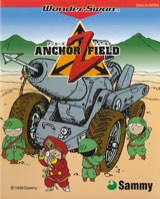
A turn-based territory game from Sammy in which tank-like Anchor Machines fire anchors across the map to claim ground from rival armies.
Screenshots
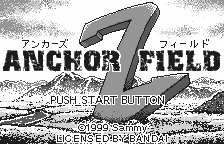
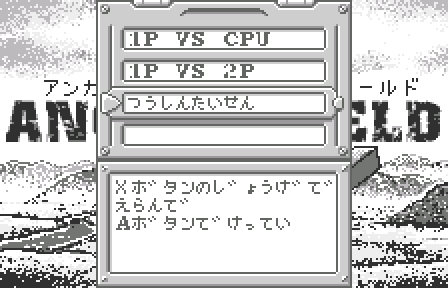
Title screen 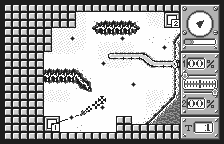
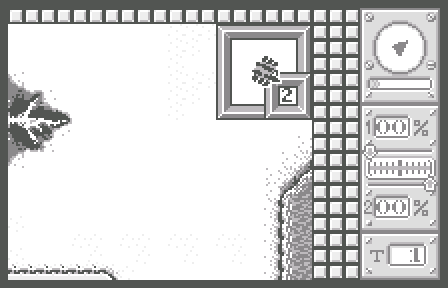
In play 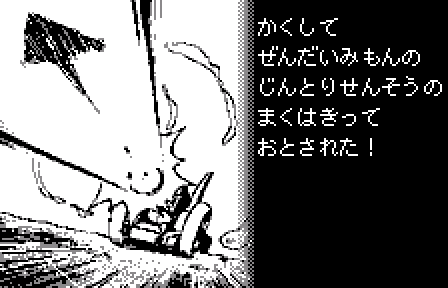

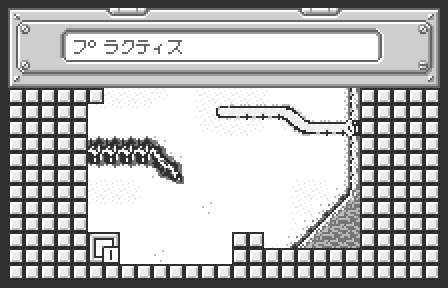
Anchorz Field is a turn-based strategy game made and published by Sammy for the original WonderSwan. It came out in Japan on 24 June 1999, a little over three months after the console itself, and was not released elsewhere.
The game is set on a planet where rival nations fight over land with vehicles called Anchor Machines. Each shot fires an anchor on a cable that can be aimed at any angle, and linking the line back to one’s own territory fences off new ground, an idea that has been compared to the arcade game Qix. Wind, terrain and the enemy all get in the way, so each map plays more like a puzzle than a straight fight.
The story
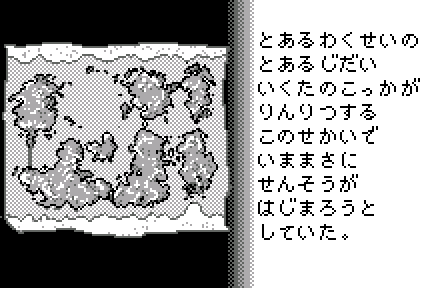
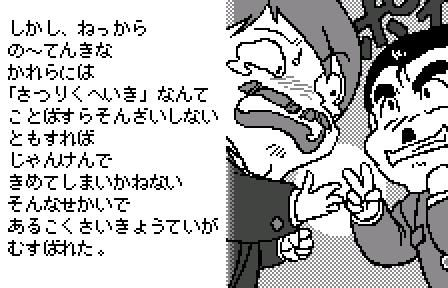
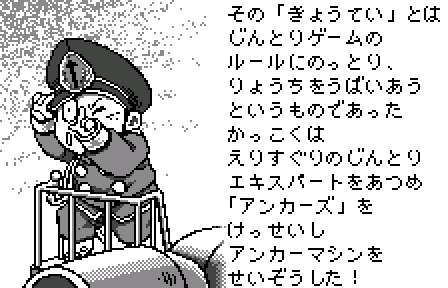
The setting is a planet at an unnamed point in its history, divided among a number of nations that are on the brink of a war of conquest. Its people, though, are easygoing to the core. Even at war they would never think of killing anyone, they would rather settle a quarrel with rock, paper, scissors, and their language does not even have words for weapons of killing. Each nation still wants a bigger country, so their representatives meet to agree on rules for the war.
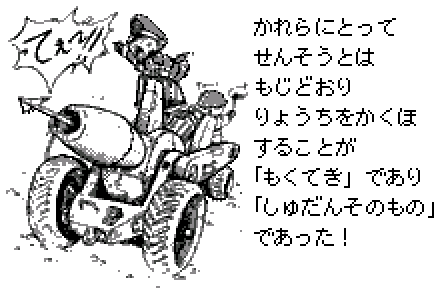
Under those rules every nation builds Anchor Machines and gathers its best specialists into a national team called the Anchors. In this war, taking territory is both the goal and the only weapon, and so an unheard-of war over land begins with the unification of the world as the prize. The player commands their own country’s Anchors. The world is made up of six continents and many small islands, shared in the finished game among 40 nations including the player’s own; the pre-release description gave 46.
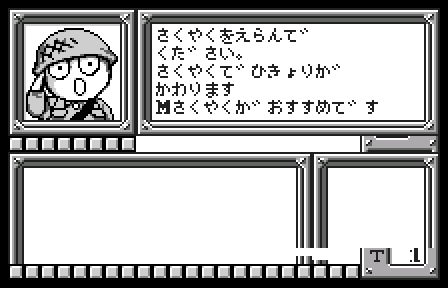
The story is told through illustrated scenes with text before and during battles, and the cast is drawn as big-headed cartoon soldiers in helmets with a commander in a red uniform. Soldiers also chip in during play with warnings and advice. Between battles a world map shows the player’s own territory, the great powers, their holdings and the neutral countries, and the player chooses which nation to fight next. The tone is light and comic, and the war is a contest over land fought without any killing.
How it plays
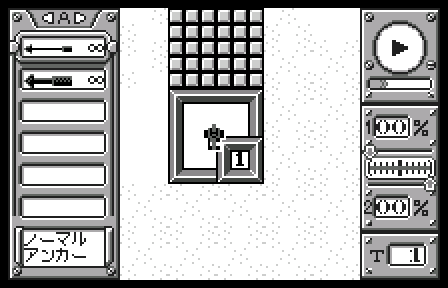
The console is held sideways. During a shot the X buttons move the Anchor Machine and turn the target cursor, A confirms and fires, B opens a submenu and Start switches the zoom. The battlefield shows each side’s base and territory, along with sea, rivers, mountains, item points and the edge of the field, while a side panel gives the wind direction and strength, both sides’ share of the map, the turn count and how many anchors are left. During the opponent’s turn the view zooms in on the action.
Battles are fought in turns. On each turn the player picks a firing point, an anchor, a direction and an explosive charge, then fires. The cable traces a line across the map, and if the anchor gets back to the player’s own territory within three shots, the area it encloses becomes theirs. A map is won by holding 40 percent of it.
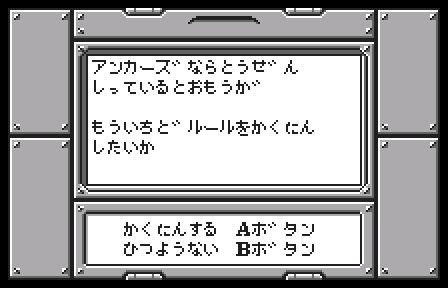
The conditions for a failed shot are not obvious, so the rules section is worth reading first. If an anchor goes off the field, drops into a river, lake or the sea, lands on a mountain, or lands in or passes through enemy territory, the turn ends at once and the anchor is lost. If it fails to get home within three shots, or its line crosses itself, the turn ends without losing the anchor. A line may fly over a river, lake or the sea, and the water it encloses is added to the new territory.
There are many kinds of anchor, rated with stars for weight (more stars means a shorter flight), air resistance (how quickly it slows) and how far the wind pushes it. Each anchor has a limited number of shots and is gone when they run out, except for anchors marked as unlimited. Small, medium and large explosive charges set the distance, and the target cursor shows where each would land, though wind moves the real landing point and the cursor’s length depends on the anchor. Weighing the anchor and the power against the wind and the ground has been likened to a golf game. Anchors, charges and items found at item points on the field can be sorted and checked in lists.
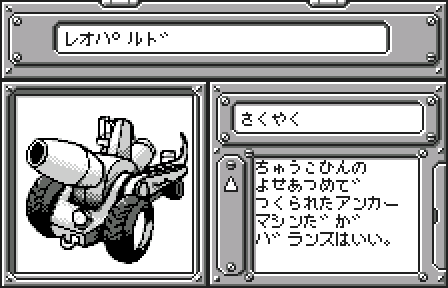
Before each battle the player picks the Anchor Machine to use, and the type of machine as well as the anchor changes how far a shot carries. As the game goes on, machines with a power gauge appear. They need no explosive charge: pressing A starts a meter rising and falling, and pressing A again fires at that strength. An item can be used just before the shot.
The key technique is area marking. Chosen from the submenu before firing, it uses the Anchor Machine to join the player’s territory to enemy ground or to the outer wall of the field, and the smaller of the two empty areas this divides off becomes the player’s at once. It can only be done within one machine’s width of the player’s own territory and never against sea, rivers or mountains, but it can turn a battle around in a single move. The submenu also has an option to surrender to the enemy and end the stage.
The story mode is a campaign across the world map, and the aim is to conquer every nation. Rivers, mountains and the order of moves make each field a different problem, and the different Anchor Machines give more than one way to solve it.
Development and release
The game was announced at a planned price of 3,800 yen before tax, on an 8-megabit cartridge with 64 kilobits of save memory, played with the console held sideways. Its story is framed lightly: the easygoing people of an unnamed planet have agreed that their war will be settled by claiming land with anchor machines, and the player sets out to unite six continents and 46 countries. Sammy included the game in its own catalogue of 1999 home releases, writing the name without the middle dot and noting that two players can compete.
Modes and features
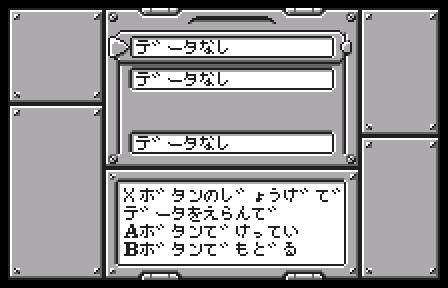
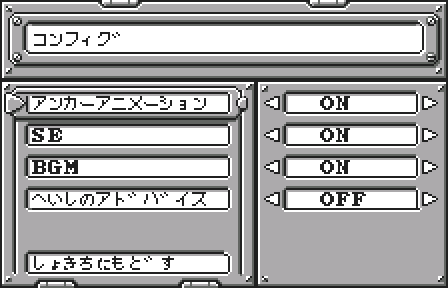
There are two modes. Story mode is for one player, who leads the Anchors in the campaign to conquer the world. Versus mode has three options: one player against the computer, on stages that open up as the story mode progresses; two players taking turns on a single WonderSwan, choosing from seven stages; and two players on two consoles joined by the link cable, each using their own save data, also across seven stages. The story can be saved from the world map with the B button in two slots, alongside an autosave, and the settings switch the anchor flight animation, sound effects, music and the soldiers’ advice on or off.
Reception
Players have found it modest-looking but original and enjoyable. Its aiming has been likened to a golf game and to the arcade game Rampart, and the war it depicts is seen as good-natured. The idea is thought to suit a small handheld screen well enough to deserve a phone remake, though the game is also felt to fall a little short.
Ports and other versions
Anchorz Field was made by Sammy for the WonderSwan, and it was never ported, remade or re-released on another system. It belongs to no series. Its nearest relatives are arcade games such as Qix, which also fence in land, but those are played in real time, while this one turns the idea into a turn-based war in which every shot is planned against wind and terrain.
Notes
The developer has never been named. The game carries only a Sammy copyright, which fits Sammy making the game itself but does not prove it. The English name is written both as Anchors Field and as Anchorz Field.