Gomoku Narabe & Reversi: Touryuumon
五目並べ&リバーシ 登龍門
Download v1.0Gomoku Narabe & Reversi: Touryuumon (五目並べ&リバーシ 登龍門) is a 2000 WonderSwan (monochrome) board-game cartridge by Sammy, released only in Japan. It holds two classic games against the computer: Gomoku (five in a row on a 15x15 board, with free rules or tournament Renju rules, where Black is barred from overlines, double threes and double fours and can start from any of the 24 standard Renju openings) and Reversi (with six starting layouts). Each has three levels, a Free Match, a Tournament against nine computer opponents in a row with an ending for clearing it, and a 2P Match over the link cable. Touryuumon (登龍門, the "dragon gate") means a gateway to success. This patch translates it into English.
Please read: this translation was made with AI (Claude), as a hobby project. A person (me) made every judgement call before release, but nobody on the project is a professional translator. I'm sharing it as it is for anyone who wants to play. Please don't upload it to romhacking sites (romhacking.net and the like). It may not be up to the standard of a real fan translation and it doesn't belong there.
Screens
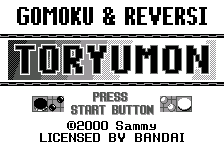
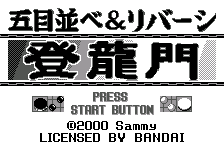
Title screen 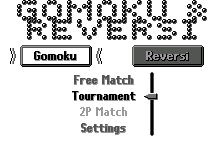
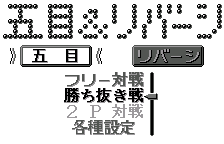
Main menu 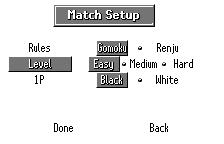
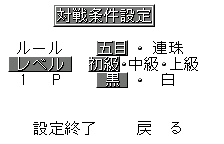
Match Setup (Gomoku) 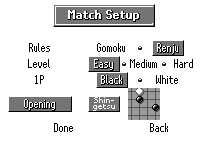
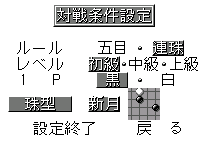
Match Setup (Renju, with an opening chosen) 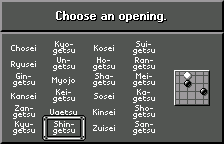
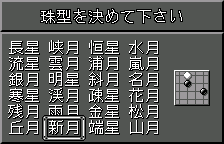
Choosing a Renju opening 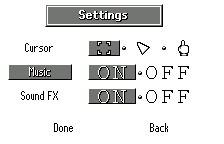
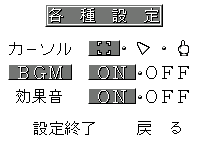
Settings 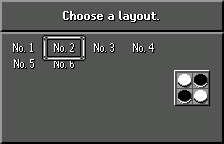
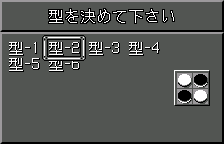
Choosing a Reversi layout 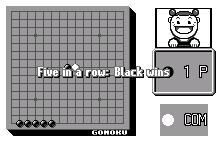
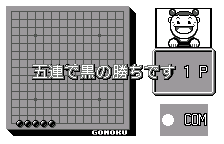
Five in a row 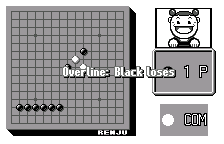
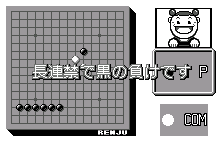
A Renju foul: overline 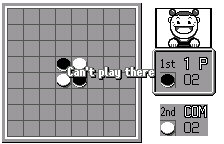
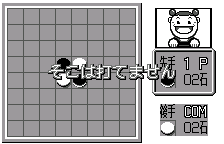
Reversi: can't play there 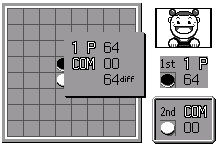
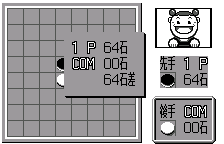
Reversi: the stone tally 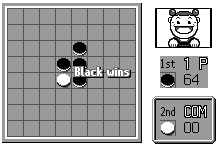
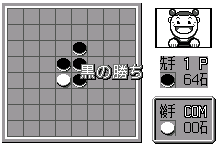
Reversi: the result 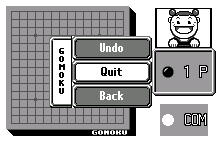
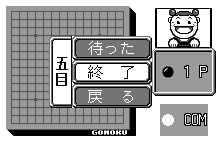
The pause menu 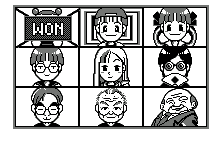
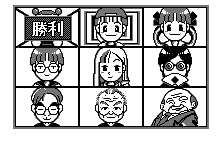
The tournament 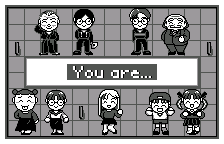
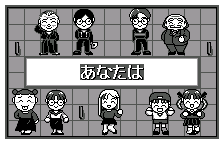
The ending 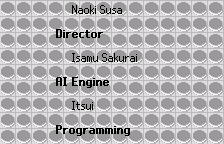
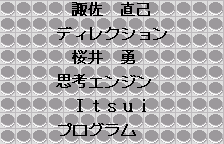
Staff credits
What’s translated
Every word in this game is a picture, so everything was redrawn in English:
- The title logo (GOMOKU & REVERSI over TORYUMON) and the menu logo drawn in stones.
- The main menu (Free Match, Tournament, 2P Match, Settings), Match Setup (rules, level, side, Renju opening, Reversi layout) and Settings.
- All 24 Renju opening names and the six Reversi layouts.
- The game screens: 1st/2nd panels, Thinking, the pause menu (Undo, Quit, Back), “Can’t play there”, the pass messages, the Reversi stone tally and every result banner (five in a row, the Renju fouls, wins, losses and draws).
- The tournament (opponent list with WON badges, New Game / Continue), both endings and the staff credits.
- The message shown on a blank or reset save.
- Already English in the original and unchanged: PRESS START BUTTON, the copyright lines, COM, ON/OFF and the GOMOKU label on the board.
Names and terms: the Renju openings use the standard romanised names used in English Renju (Chosei, Kyogetsu, … Sangetsu); long names are written over two lines (Shin- / getsu) to fit their cells. The levels are Easy / Medium / Hard. The counter word 石 (“stones”) after the counts is dropped, so the tally reads “64” and “64 diff”. The credits give the staff’s names in Western order with their most common readings.
How it was made: AI translation, independent checks, human decisions
- Claude translated everything directly from the Japanese pictures and did all the hacking, including the lettering: a small pixel font in the style of the original, drawn into the game’s own picture sheets.
- A separate, independent Claude reviewer checked the whole game against the Japanese (screens, text and documents); its 13 findings were verified and fixed.
- On screen, in the emulator: every screen of the game from power-on (menus, setups, both games, the Renju fouls, Reversi wins, losses and draws as both colours, passes, the pause menu), both tournaments through all nine opponents to the endings and the credits, random play from three points, and the title left alone for 10 minutes (no demo). A detector compared the Japanese lettering with every tile on screen and found none left. 2P Match was played between two linked emulators. Every screen was also compared side by side with the original, enlarged, for alignment.
- The judgement calls were listed with the Japanese, a literal reading, screenshots and the options, and I decided all 16 by hand over two rounds: the title and logos, the opening names, the levels, the banners, the dropped “stones”, the endings and the credits.
Changelog
- v1.0: first release.
Sources consulted
- Japanese text: the WonderSwan ROM itself.
- Renju terms and the opening names: the standard English Renju names, as listed on Wikipedia’s “Renju opening pattern”.
How to patch
Apply gomoku-reversi-en-1.0.bps to the Japanese ROM “Gomoku Narabe & Reversi - Touryuumon (Japan)” (CRC32 6CD1411E) with Floating IPS, beat or ROM Patcher JS. The result should be CRC32 36BF164B.
The ROM stays 512 KB. It’s a WonderSwan (mono) game, so keep the .ws extension.
You must provide your own copy of the original Japanese game to apply it.
Download: gomoku-reversi-en-1.0.bps on the release page.
Known issues
- It hasn’t been played start to finish by a person. If you find leftover Japanese, a broken picture or a crash, please tell me where it happened.
- A few banners never came up in testing and were only checked as pictures: “Black passes” and the Renju foul banners for White (they share their letters with banners that were seen).
- 2P Match was tested between two linked emulators, not on real hardware with a link cable.
Technical notes (for the curious)
- The game has almost no text: every word is a picture in one of 25 image resources (2-bit tiles plus a tile map), and each screen copies rectangles of those pictures into place. Only the blank-save message uses a font.
- The English is drawn into the same pictures. Only changed cells are re-tiled, and new tiles are shared wherever possible, because several screens load a whole picture sheet into 512 tile slots that were already nearly full; repeated banner halves (“Black wins”, “White loses”…) are split at a fixed place so they share tiles. Pictures that grew were moved to free space and every reference to them was repointed.
- The game also copies tiles into the screen at run time, so the redrawn pictures keep those target tiles separate, and the ending text stays inside the strip the game redraws between frames.
- The cartridge contains a developer task menu (pad check, memory viewer, a console expecting a development keyboard). It helped test the endings; it isn’t in the patch.
Feedback on this translation
Found a line that reads wrong, leftover Japanese, cut-off text, or a crash? Tell us where. We go through feedback every day with the help of Claude, and a person decides on any change. Fixes go into the next version.